
Blog
Wall Basket Decor: How to Create a Basket Wall

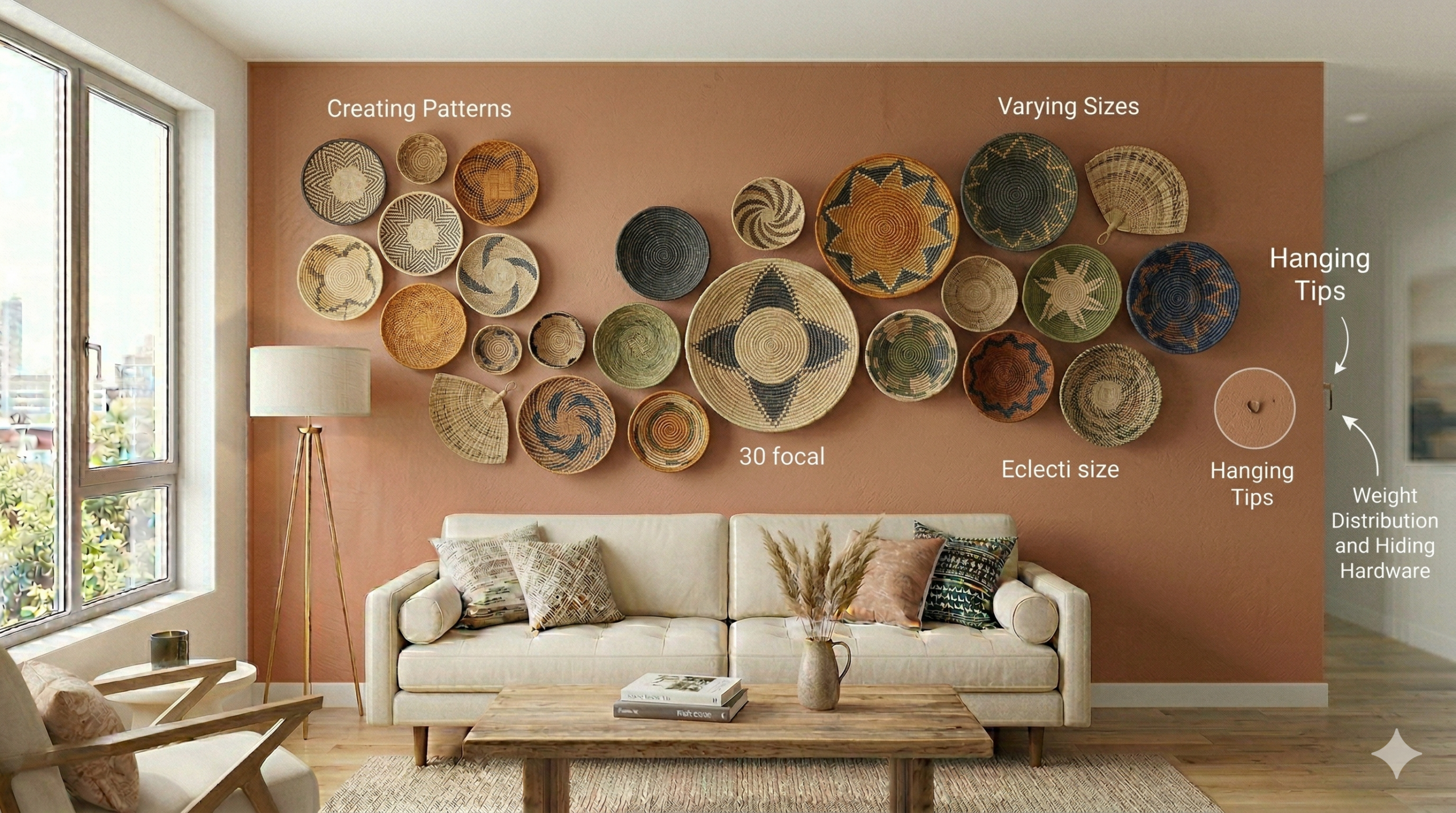
A basket wall can look effortlessly collected in one home and completely chaotic in another.
That is what makes basket wall decor so appealing and so easy to get wrong. You are working with objects that already have texture, pattern, shape, and cultural character. When they come together well, the wall feels warm, layered, and artistic. When they do not, it can feel random fast.
The good news is that a beautiful basket wall is not about luck or having an “eye” for styling. It is about understanding layout, scale, spacing, and restraint. Once those pieces are in place, wall basket decor becomes one of the most effective ways to add texture and soul to a room without relying on framed art.
This guide breaks down exactly how to create a basket wall that feels curated, modern, and intentional, whether your style leans Global Nomad, New Mediterranean, or Modern Boho.
Why Basket Wall Decor Works So Well
A lot of wall styling falls flat because it only adds color or imagery. Baskets do something different.
They add:
- Texture
- Depth
- Handmade character
- Pattern without heaviness
- Warmth without clutter
That is why basket wall ideas work especially well in rooms that already have clean furniture, plaster walls, wood tones, linen, leather, or natural stone. The baskets bring visual movement and human touch to spaces that might otherwise feel too flat or too controlled.
They also solve a common design problem: how to decorate a wall without making it feel too formal. Framed art can sometimes feel rigid. Basket arrangements usually feel more relaxed and layered.
The Biggest Mistake People Make With Basket Walls
Most people think a basket wall should look spontaneous.
It should feel spontaneous. It should not be spontaneous.
That is the counter-intuitive truth. The best basket wall decor almost always has hidden structure underneath the relaxed, collected look. There is usually a clear outer shape, a controlled size distribution, and deliberate spacing holding everything together.
Without that structure, the wall starts to feel like a pile of nice objects instead of one cohesive composition.
The Basket Wall Formula: Think in Composition, Not Individual Pieces
Before you buy or hang anything, shift your thinking.
Do not ask:
- Which basket is prettiest?
- Which pattern do I like most?
- Which one should go in the middle?
Ask instead:
- What overall shape should this arrangement create?
- How large should the full composition be?
- How will size and pattern vary across the wall?
- What will make the grouping feel balanced?
That mindset is what separates decorative clutter from strong wall basket decor.
Where Basket Wall Decor Works Best
A basket wall can be beautiful in many rooms, but it works best where texture and warmth are needed.
Best Rooms for Basket Wall Ideas
Living Room
A basket wall adds softness and dimension above a sofa, console, or accent chair.
Dining Room
It can make the space feel more welcoming and layered, especially with wood, plaster, or linen nearby.
Entryway
This is one of the best places for basket wall decor because it creates instant personality and warmth.
Bedroom
A softer basket arrangement can work beautifully above a bed or dresser.
Hallway or Stair Landing
These transitional spaces often benefit from texture more than traditional framed art.
Where It Needs More Caution
Basket walls can be harder to style in:
- Very formal interiors
- Small walls already crowded with furniture
- Rooms with lots of busy pattern elsewhere
- Spaces where the wall already has strong architectural detailing
In those rooms, a smaller, more restrained arrangement usually works better than a large statement installation.
How Many Baskets Should You Use?
There is no magic number, but there is a visual principle.
A basket wall should feel like a single composition, not scattered dots across a wall.
Good general ranges:
- 3 to 5 baskets for a small wall or narrow zone
- 5 to 9 baskets for medium arrangements
- 9 to 15 baskets for a fuller statement wall
The number matters less than the overall shape and scale. A well-planned group of five can look stronger than an unfocused group of twelve.
How Big Should a Basket Wall Be?
This is one of the most important styling rules.
If your arrangement is above furniture, the full composition should usually span about 60% to 75% of the furniture width below it.
Example:
- Sofa width: 240 cm
- Ideal basket wall width: around 145 to 180 cm
Example:
- Console width: 150 cm
- Ideal basket wall width: around 90 to 112 cm
This rule gives basket wall decor enough presence to feel connected to the furniture instead of floating awkwardly above it.
Hanging Height Rules That Make It Look Right
Height can make or break the wall.
If the arrangement is hung too high, it disconnects from the room. If it is too low, it can feel cramped.
Above Furniture
If you are hanging the basket wall above a sofa, bed, console, or sideboard:
- Leave about 15 to 25 cm between the bottom of the lowest basket and the top of the furniture
This keeps the arrangement visually anchored.
On an Open Wall
If the wall is freestanding with no furniture below it, aim for the center of the composition to sit around 145 to 152 cm from the floor.
That gives the grouping a natural viewing height.
The Best Basket Wall Patterns to Use
This is where the wall starts to feel intentional.
The layout pattern you choose will shape the whole mood of the arrangement.
1. Organic Cluster
This is the most popular format for wall basket decor.
The baskets vary in size and placement, but the grouping still forms a clear overall silhouette.
Best for:
- Modern boho spaces
- Global-inspired interiors
- Relaxed living rooms
- Entryways
Why it works:
It feels collected and natural while still allowing structure underneath.
Key tip:
Create an invisible outer boundary first. Think oval, rectangle, or loose triangle.
2. Symmetrical Layout
This uses baskets in a more ordered arrangement, often with mirrored placement on either side.
Best for:
- More polished interiors
- Dining rooms
- Entryways with a console table
Why it works:
It gives artisan texture a cleaner, more formal presentation.
Key tip:
Symmetry works best when the basket sizes are consistent or intentionally graduated.
3. Centered Burst Pattern
In this layout, one larger basket anchors the center while smaller ones radiate outward.
Best for:
- Walls above consoles
- Smaller feature walls
- Rooms needing a clear focal point
Why it works:
It gives the eye an obvious starting point.
Key tip:
Make sure the central basket is meaningfully larger, not only slightly larger.
4. Horizontal Spread
This is a wider, flatter arrangement that stretches across the wall more than it rises upward.
Best for:
- Above long sofas
- Dining benches
- Wide hallways
Why it works:
It respects the horizontal line of the furniture below.
Key tip:
Use a few larger anchor baskets so the composition does not feel too dotted or thin.
5. Vertical Cascade
This is ideal for narrow wall zones where width is limited but height is available.
Best for:
- Stair landings
- Narrow entry walls
- Gaps between windows
- Spaces beside doors
Why it works:
It turns an awkward vertical zone into a designed feature.
Key tip:
Keep the arrangement narrow enough to suit the wall, but use size variation to maintain interest.
How to Mix Basket Sizes the Right Way
Size variation is what gives a basket wall rhythm, but too much randomness can make it look messy.
Use this simple structure:
- Large baskets create anchors
- Medium baskets create flow
- Small baskets fill and connect
A good rule is to build the layout around 2 to 4 larger pieces, then support them with medium and smaller baskets.
A reliable size mix:
- 20% large
- 50% medium
- 30% small
You do not need exact math, but this ratio helps avoid a flat arrangement where everything feels too similar.
How to Mix Patterns Without Making the Wall Too Busy
This is where many strong basket wall ideas go wrong.
Baskets often come with rich woven patterns, color variation, and artisan detail. That is beautiful, but if every basket screams for attention, the grouping loses cohesion.
A Better Way to Mix Patterns
Choose one of these approaches:
1. Same Color Family, Varied Pattern
This is the safest and most elegant option.
For example:
- Natural straw
- Black accents
- Warm brown detailing
- Cream and muted terracotta tones
2. Same Pattern Language, Varied Scale
Use baskets with similar motifs but different sizes.
This creates consistency without repetition.
3. One Statement Basket, Quieter Supporting Baskets
Let one highly detailed piece stand out while the rest stay simpler.
This is one of the best expert-level moves because it gives the eye hierarchy.
What to Avoid With Pattern Mixing
Be careful with:
- Too many competing colors
- Highly saturated baskets mixed without restraint
- Equal visual weight everywhere
- Too many tiny intricate patterns grouped tightly together
The goal is a wall that feels layered, not loud.
Color Palettes That Make Basket Wall Decor Feel Modern
If you want your wall basket decor to feel current rather than overly rustic, the palette matters.
Best palette directions:
- Natural straw + black
- Sand + charcoal + cream
- Warm tan + off-white
- Terracotta accents + natural fiber
- Olive or clay used sparingly with neutrals
These palettes work especially well with New Mediterranean and Modern Boho interiors because they feel earthy but disciplined.
Less effective directions:
- Too many rainbow tones
- Overly orange-brown walls with orange-brown baskets
- Heavy pattern plus heavy color
- No contrast at all
A little contrast helps baskets read clearly from a distance.
How Far Apart Should Baskets Be?
Spacing is one of the biggest factors in whether a basket wall looks intentional.
In most cases, baskets should sit about 5 to 10 cm apart from edge to edge.
Tighter spacing:
- Feels modern
- Feels more like one composition
- Works well with small and medium baskets
Looser spacing:
- Feels more relaxed
- Works better with larger baskets
- Can suit airy, open walls
What matters most is consistency. Uneven gaps are one of the fastest ways to make basket wall decor look accidental.
A Designer Trick: Build the Outline First
Here is one of the smartest ways to plan the wall before hanging anything.
Start by placing the outermost baskets first:
- Top
- Bottom
- Left
- Right
This creates the overall silhouette of the composition. Then fill in the middle with supporting baskets.
Why does this work?
Because it keeps you focused on the arrangement as a whole instead of obsessing over one basket at a time. It is one of the easiest ways to make basket wall ideas look polished.
What to Pair With a Basket Wall
A basket wall looks strongest when the materials around it support the same mood.
Best pairings:
- Linen upholstery
- Light or medium-tone wood
- Leather accents
- Plaster or matte painted walls
- Stone, ceramic, and clay accessories
- Black metal used in small doses
These materials help the arrangement feel warm and collected.
Use More Caution With:
- Glossy lacquered furniture
- Very ornate traditional pieces
- Too many other wall-mounted objects nearby
- Busy wallpaper behind the baskets
Texture needs breathing room.
How to Hang Basket Wall Decor Securely
Because baskets are lightweight, they are usually easier to hang than framed art. But they still need planning.
Practical hanging tips:
- Use removable wall-safe hooks for very light baskets
- Use small nails or picture hooks for more secure placement
- Hang from the woven rim, loop, or hidden thread support
- Check depth so baskets sit flush enough against the wall
- Test the layout on the floor first before putting anything on the wall
If the baskets are valuable or handmade, handle them carefully and avoid stressing delicate woven edges.
Common Basket Wall Decor Mistakes
Even beautiful baskets can fall flat if the arrangement is off.
1. Using all the same size
This removes rhythm and makes the wall feel static.
2. Making the wall too small for the space
An undersized arrangement usually looks timid rather than refined.
3. Mixing too many statement pieces
Not every basket should compete equally.
4. Ignoring the furniture below
The wall should relate to the room, not float separately from it.
5. Making it too theme-heavy
A basket wall should add texture and artistry, not turn the room into a set.
The Advanced Rule: Texture Needs Restraint
Here is the principle that makes the best basket walls feel elevated:
The more texture you add to the wall, the calmer the surrounding room should be.
This is why basket arrangements look so good in homes with clean sofas, simple wood furniture, muted textiles, and quiet color palettes. The baskets become the expressive layer. They do not need five other bold elements competing with them.
That is the real secret behind refined wall basket decor. It is not maximalism. It is controlled warmth.
Final Thoughts: A Great Basket Wall Feels Collected, Not Cluttered
The best basket wall decor does not just fill empty space. It creates rhythm, warmth, and character in a way framed art often cannot.
When the scale is right, the patterns are edited, and the spacing is consistent, a basket wall can feel global, modern, and deeply personal all at once. That is why it works so well in Global Nomad, New Mediterranean, and Modern Boho homes.
So before you start hanging baskets one by one, step back and think like a stylist. Plan the shape. Control the palette. Vary the scale. Let the wall breathe.
That is how basket wall ideas go from trendy to timeless.
Want the easiest first step? Lay all your baskets on the floor, create the full arrangement before hanging anything, and photograph it from above. That one move will help you spot spacing and balance issues before they end up on the wall.