

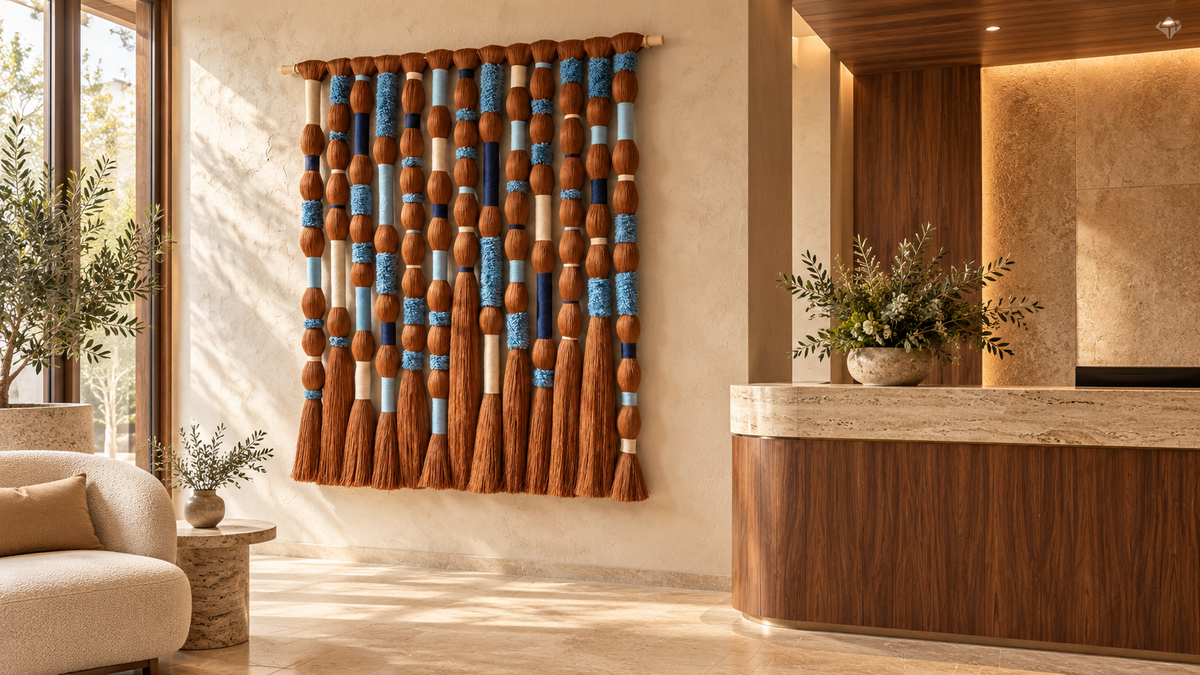
A hotel lobby introduces guests to the character of a place. Before they reach their room, they notice the materials, lighting and objects around them. Artwork helps shape that first impression—whether through a striking composition behind reception or a quieter textile piece beside a seating area.
Choosing custom wall art for a hotel lobby begins with the space itself: how guests move through it, where they pause and what they see from different distances. Scale, material and placement should be considered together.
Start with the Guest’s View
Identify where the artwork will be seen first. Is it visible from the entrance, behind the reception desk or along the route to the lifts?
A reception wall may benefit from a composition with a clear silhouette that reads from across the room. A lounge offers a closer viewing experience, where wrapped fibers, hand-finished surfaces and smaller details can become part of the setting.
Photograph the proposed location from the entrance, the reception queue and the seating area. These views often reveal whether the artwork should act as the main focal point or complement an existing architectural feature.
Choose Scale Around the Architecture
Wall dimensions are only the starting point. Doors, signage, lighting, furniture and changes in ceiling height all influence the area available for art.
Measure the usable wall width and height, then mark a possible composition with removable tape. Check it from both standing and seated positions. For a three-dimensional piece, consider its depth as well as its front-facing dimensions.
For example, a wall measuring 300 cm (approximately 118 inches) across does not necessarily call for a single artwork of similar width. A smaller composition with generous space around it may feel more balanced, particularly when the wall also contains lighting or hotel signage.
Custom sizing allows the artwork to respond to these conditions. For a group of separate elements, specify the overall installation dimensions—including the gaps between pieces.
Select Materials for the Intended Atmosphere
Fiber Art for Texture and Visual Softness
Textile artwork can introduce a softer visual presence alongside stone, glass and metal finishes. Its detail rewards close viewing, making it an option for reception backdrops and lounge areas.
Our Macrame & Fiber Wall Art collection includes compositions with different proportions, textures and color arrangements. Selected designs can be discussed in alternative sizes or palettes, depending on their construction and materials.
Wall Tubes for Sculptural Rhythm
Repeated cylindrical forms offer another way to work with textiles. Their lengths, spacing and arrangement create a composition with depth, while shadows change its appearance throughout the day.
Explore our Wall Tubes collection when considering a grouped installation for a reception or seating area. The arrangement deserves as much attention as the individual pieces: closer spacing creates a more concentrated composition, while wider spacing gives each element greater independence.
Metal for a Defined Focal Point
Metal wall art offers a different visual language, with distinct outlines and sculptural forms. Depending on the design and finish, it can introduce contrast within a restrained interior or connect with architectural metal details elsewhere in the lobby.
Our Metal Wall Art collection provides a starting point for exploring this approach.
Preserved Moss and Cotton for Organic Texture
Sarmal Design’s Moss & Cotton combines preserved natural moss, cotton yarn and an internal iron framework. The cotton receives an additional sizing treatment to help retain its form.
The preserved moss requires no watering or routine plant care. Designed for indoor use, the work can be considered for wall or ceiling mounting. Its reference length is 170 cm (66.9 inches), with length adjusted to suit the project.
Placement and mounting details should be discussed for the intended location, particularly for a suspended composition.
Plan Lighting and Installation Together
Sculptural artwork changes with the direction of light. Lighting from the side can emphasize depth and cast stronger shadows; more frontal illumination produces a different effect.
Review the proposed artwork alongside the lighting plan. Consider daylight, evening lighting and any nearby signs that need to remain clearly visible.
Before production, agree on the wall or ceiling construction, fixing positions, artwork weight and installation access with the project team. Keep projecting elements clear of circulation routes and allow access for routine cleaning. Any project-specific material or performance requirements should also be identified at this stage.
Prepare a Clear Custom Artwork Brief
A useful project brief includes:
- Photographs or drawings of the proposed location.
- Available width, height and depth, in centimetres or inches.
- The room’s material palette and preferred colors.
- The selected design, quantity and intended arrangement.
- Installation requirements and target delivery date.
At Sarmal Design, we create handmade wall art and sculptural pieces in Ankara, Türkiye. Customization options depend on the individual design; pricing and production timing are prepared around the agreed project scope.
Planning artwork for a hotel lobby or reception area? Visit our For Interior Designers page or share your project with us. Send the location, dimensions and a few reference images so we can discuss a composition for your space.


