

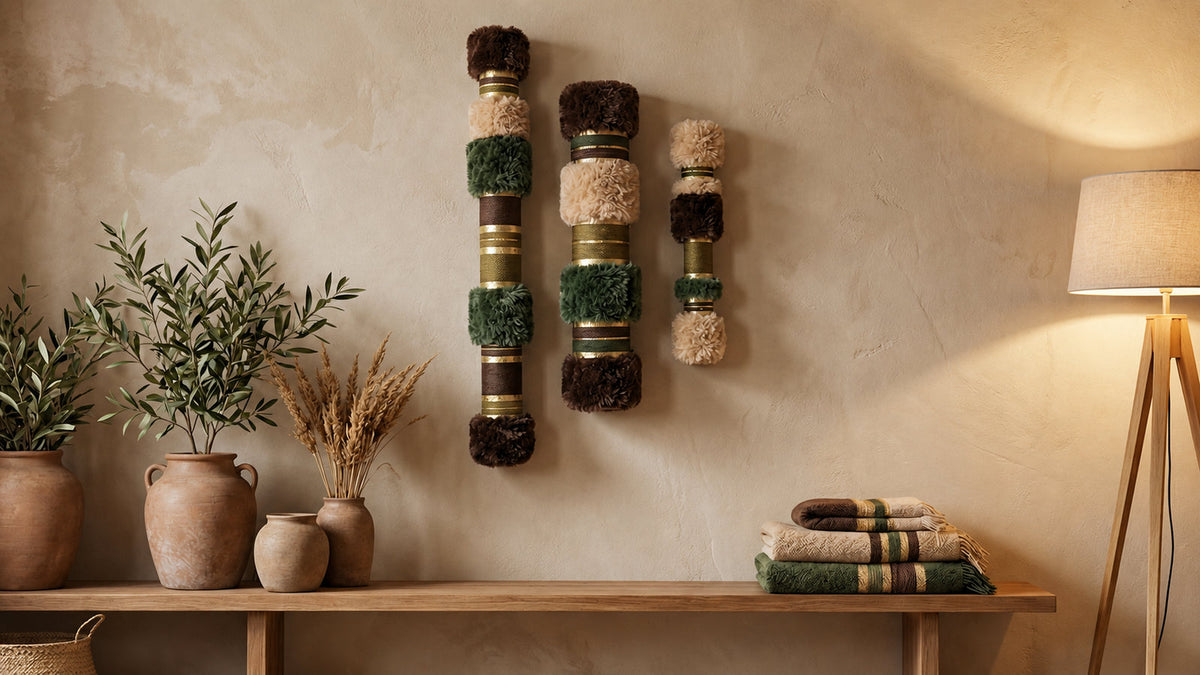
A minimalist living room can have a comfortable sofa, a well chosen rug and beautiful light, yet still feel unfinished. When the main surfaces are smooth and the colors are similar, a textured artwork gives the eye somewhere to settle. A woven surface, a hanging length of fiber or a sculptural form introduces detail while leaving the room open and calm.
The starting point is the relationship between the artwork and the materials already in the room. Look at the wall, upholstery, flooring and furniture together. Then choose a piece whose surface adds something you want to see more of.
Choose a texture that complements your furniture
Against a plaster wall and a leather sofa, loose fiber can bring a softer visual edge. Alongside linen upholstery and a thick rug, a more defined sculptural form can give the composition structure. In a room with glass or polished stone, woven detail creates a noticeable change of surface.
Try repeating one material or tone from elsewhere in the room. Warm cream fiber might relate to a linen curtain; a woven plate might echo a timber side table. The connection can be subtle. Leave enough variation for the artwork to feel like a considered addition.
Match the form to the space
For a flowing silhouette, explore Macrame & Fiber Wall Art. Look closely at the outline as well as the surface: a long fringe, a broad horizontal piece and a compact woven composition each give the wall a different rhythm.
Wall Tubes offer a more sculptural direction. Their cylindrical forms project from the wall, bringing depth and shadow into the arrangement. Consider how the composition looks from the doorway and from the sofa, where its side profile may be more visible.
For a composition built from round shapes, consider Wicker Wall Plates. A small group can soften an angular room. Lay out the complete arrangement before hanging so the spacing feels intentional and each plate remains distinct.
Let color support the texture
A cream artwork on an off-white wall can create a quiet effect, with its edges and shadows providing much of the contrast. If your room already feels very pale, try a deeper neutral or one color drawn from a rug or chair.
For example, a muted rust detail can connect an artwork to warm wood. A blue accent can relate to an existing textile. Start with one connection, then view the piece alongside the whole room. A material sample or a clear close-up is helpful when screen colors leave you unsure.
Notice how the light changes the surface
View the intended wall in the morning and again when your evening lamps are on. Light falling from the side can make raised details and the shadows behind sculptural pieces more visible. Even lighting gives a flatter, gentler reading of the same surface.
If you plan to add a picture light or adjustable spotlight, test the direction before fixing it in place. Check whether the shadows clarify the composition or make it look busy. Follow the chosen artwork’s care instructions when deciding on exposure to sunlight.
Try a simple living room composition
For a room with a low cream sofa and oak furniture, consider one broad fiber artwork, a plain rug and a side lamp. Give the artwork clear space around its outline. Keep nearby objects low enough that they do not interrupt the view of the hanging fibers.
For a room with straight furniture lines and a monochrome palette, try a group of Wall Tubes on the main wall. Repeat one tone in a cushion or ceramic object. The cylindrical forms can become the main detail in the room, so the surrounding wall can stay open.
Check the full dimensions before ordering
Measure width, height and depth, including any fringe or projecting elements. For a group, measure the entire arrangement with the intended gaps. Mark its outline on the wall with removable paper before making your decision. Check the mounting requirements for the selected piece and your wall type.
Explore Sarmal Design’s collections through the links above to compare surfaces and compositions. For a residential or hospitality project, share your wall dimensions, palette and reference images through our For Interior Designers page. We can discuss which size or color adaptations are possible for the selected design.


